
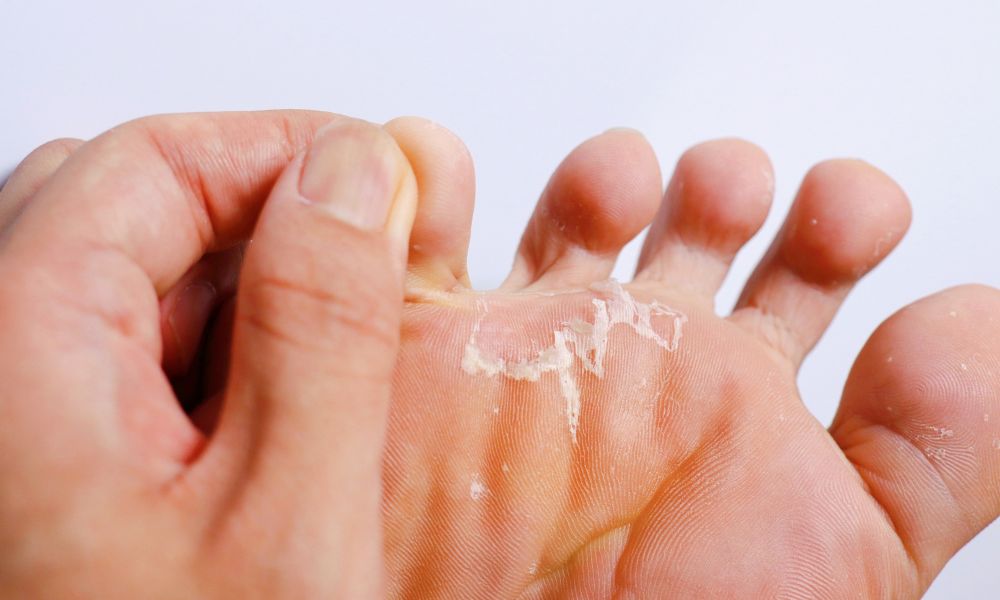
Dry and flaky skin on the feet is a common problem that many people experience at some point in their lives. Most individuals assume that the condition is simply caused by dry weather, dehydration, or a lack of proper skincare. While these factors can contribute to dryness, they are not always the real cause. In some cases what appears to be ordinary dry skin may actually be a fungal infection known as Tinea Pedis.
Understanding the difference between simple dryness and a fungal infection is important because delayed recognition can allow the condition to worsen. Learning the warning signs can help protect foot health and prevent unnecessary discomfort.
What Is Tinea Pedis?
Tinea Pedis is a common fungal infection that affects the skin on the feet. It is often referred to as athlete’s foot because it frequently develops in warm and moist environments where fungi thrive.
The infection commonly affects the areas between the toes but it can also spread to the soles, sides and other parts of the feet. Because the early symptoms often resemble dry skin many people fail to recognize the condition during its initial stages.Early identification is important because timely Tinea Pedis treatment can help manage symptoms and prevent the infection from spreading further.
Why It Is Often Mistaken For Dry Skin
Many foot conditions cause rough and flaky skin. As a result people frequently assume that moisturizing alone will solve the problem.
However fungal infections can produce symptoms that look very similar to ordinary dryness. The skin may become rough, cracked, and scaly, making it difficult to identify the actual cause without closer attention.
This confusion often delays proper management and allows the infection to continue spreading.
Signs That It May Be More Than Dry Skin
Persistent Flaking
Normal dry skin usually improves with regular moisturizing and proper foot care. When flaking continues despite these efforts, a fungal infection may be responsible.
The affected skin often appears white, peeling or powdery and may gradually spread to nearby areas.
Cracks Between the Toes
One of the most noticeable signs is cracking between the toes. The skin may split, peel or become excessively dry in these spaces.
Unlike ordinary dryness these cracks can remain persistent and may become uncomfortable over time.
Continuous Itching
Itching is not always present with simple dry skin. However fungal infections commonly cause persistent itching that becomes more noticeable after wearing shoes or socks for long periods.
Frequent scratching may further irritate the skin and increase discomfort.
Redness and Irritation
The affected areas may appear red and inflamed. The skin can also become sensitive to touch.
When redness accompanies dryness and itching, it may indicate an underlying fungal problem rather than a simple lack of moisture.
Burning Sensation
Some individuals experience a mild burning or stinging sensation on the feet. This symptom often develops as the infection progresses.
Dry skin alone rarely causes ongoing burning sensations.
Common Causes That Increase the Risk
Certain conditions create an environment where fungal organisms can grow more easily.
Common risk factors include:
- Wearing tight shoes for long periods
- Excessive sweating
- Walking barefoot in public locker rooms
- Damp socks
- Poor foot ventilation
- Shared footwear or towels
Key point to know:People who regularly encounter these situations may have a greater risk of developing Tinea Pedis.
Early Warning Signs Attention
Many people continue treating the condition as simple dryness without realizing the actual cause.
Early recognition is important because it helps prevent:
- Worsening skin damage
- Increased discomfort
- Spread to other areas of the feet
- Recurring foot irritation
Key point to know: Identifying the underlying cause early can help individuals take appropriate action before symptoms become more severe.
Keeping Feet Healthy
Maintain Good Foot Hygiene
Wash feet regularly and dry them thoroughly especially between the toes. Moist environments encourage fungal growth.
Choose Breathable Footwear
Shoes that allow airflow help reduce moisture buildup and support healthier feet.
Change Socks Regularly
Clean and dry socks help reduce excessive moisture and keep feet comfortable throughout the day.
Avoid Sharing Personal Items
Avoid sharing shoes, socks, towels or foot care products with others, as fungal organisms can spread through contaminated items.
Monitor Persistent Symptoms
If dryness, itching, peeling or cracking continues despite basic foot care, professional evaluation may be beneficial.
When Expert Assessment May Be Needed
Persistent foot symptoms should not always be dismissed as simple dryness. A healthcare professional can examine the affected area and determine whether a fungal infection is present.
Accurate identification of the condition helps ensure that appropriate management strategies are used rather than relying on ineffective self-treatment.
A Quick Recap
Dry skin on the feet is not always caused by environmental factors or dehydration. In some cases it may be the underlying reason behind persistent flaking, itching, redness, and cracking skin. Because the early symptoms often resemble ordinary dryness, many people overlook the condition. Recognizing the warning signs early and maintaining proper foot hygiene can help protect foot health and prevent unnecessary discomfort. Understanding the difference between dry skin and a fungal infection is an important step toward healthier feet.
Frequently Asked Questions (FAQs)
1. What is Tinea Pedis?
It is a fungal infection that affects the skin of the feet and is commonly known as athlete’s foot.
2. Can it look like dry skin?
Yes. The infection often causes flaking, peeling and rough skin that can easily be mistaken for ordinary dryness.
3. What are the common symptoms?
Common symptoms include itching, cracking between the toes, redness, peeling skin, and irritation.
4. Why does the infection commonly affect the feet?
Fungi grow well in warm and moist environments making feet an ideal location for infection.
5. When should I seek professional advice?
You should consider professional evaluation if symptoms persist, worsen or do not improve with routine foot care.