
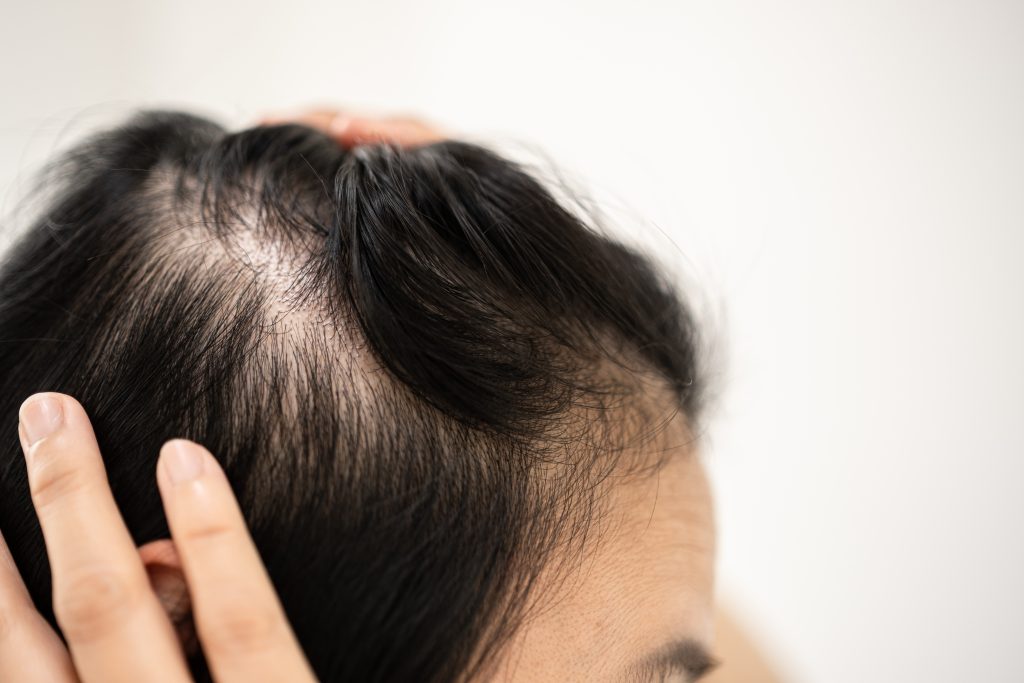
Alopecia Mucinosa is a rare scalp condition that leads to patchy hair loss. It affects hair follicles and changes the normal hair growth cycle. The condition develops slowly and often goes unnoticed in early stages. Many people only realize it when visible bald patches appear on the scalp.
Simple Understanding of the Condition
Alopecia Mucinosa mainly affects hair follicles from inside. It changes how hair grows instead of just causing simple hair fall. The scalp may look normal at first but internal changes start affecting hair growth patterns.
How the Condition Develops (Simple Flow)
Normal Hair Follicle → Immune reaction starts → Mucin builds up → Follicle blockage → Weak hair growth → Patchy hair loss
This process shows how internal changes slowly lead to visible hair loss.
Hidden Causes of Alopecia Mucinosa
1. Immune System Reaction
The immune system starts attacking healthy hair follicles by mistake. This creates inflammation around the roots and disturbs normal hair growth. Over time, follicles become weak and stop producing healthy hair.
2. Mucin Build-Up in Follicles
Mucin is a gel-like substance that collects inside hair follicles. When it increases, it blocks the growth path of hair. This blockage prevents proper hair development and leads to patchy bald areas.
3. Chronic Scalp Inflammation
Long-term inflammation slowly damages the scalp environment. It weakens the hair roots and reduces their ability to grow strong hair. This condition often develops without early visible signs.
4. Associated Skin Conditions
Some skin disorders can trigger or support this condition. These conditions disturb scalp balance and increase follicle sensitivity. As a result, hair growth becomes uneven.
5. Rare Cellular Changes
In some cases, skin cells around follicles behave abnormally. This affects the natural growth cycle of hair. It is rare but considered an important internal factor.
Main Effects on Hair
Alopecia Mucinosa causes specific changes in hair and scalp:
- Patchy hair loss in small or large areas
- Uneven hair density on scalp
- Weak hair regrowth in affected areas
- Mild redness or irritation in some cases
How Doctors Manage the Condition
Treatment focuses on controlling internal scalp changes. Doctors aim to reduce inflammation and restore normal follicle activity.
Medical Approaches:
- Anti-inflammatory medications to reduce scalp reaction
- Corticosteroid therapy to control immune activity
- Topical treatments to support follicle healing
- Regular scalp monitoring for progress tracking
Supportive Care
Along with treatment, lifestyle care also helps improve recovery:
- Use gentle shampoo and avoid harsh chemicals
- Maintain a healthy and balanced diet
- Reduce stress levels to support immune balance
- Avoid scratching or irritating the scalp
Treatment Goal
The main goal of treatment is not just stopping hair loss but also:
- Reducing inflammation
- Restoring follicle function
- Supporting natural hair regrowth
- Preventing further patch formation
Bottom Line
Alopecia Mucinosa is a rare hair condition that causes patchy hair loss due to internal scalp changes. The hidden causes include immune system reaction, mucin build-up, chronic inflammation, associated skin conditions, and rare cellular changes. These factors disturb normal hair growth and lead to visible patches. With proper medical treatment and scalp care, the condition can be managed and hair regrowth can improve over time.
Frequently Asked Questions
1. What is Alopecia Mucinosa?
It is a rare scalp condition that causes patchy hair loss due to internal follicle changes.
2. What is the main hidden cause?
The main cause is immune system reaction combined with mucin build-up.
3. Can hair grow back in this condition?
Yes, in many cases hair regrowth is possible with treatment.
4. Is it a permanent condition?
Not always but early treatment improves recovery chances.
5. How is it treated?
Doctors use anti-inflammatory and immune control treatments.