
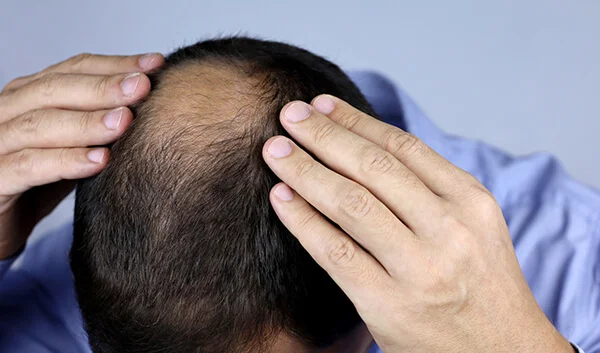
Androgenetic Alopecia
Androgenetic Alopecia is a long-term hair loss condition that affects both men and women. It develops gradually and changes the natural growth cycle of hair. In this condition, hair follicles become smaller over time, which results in thinner and weaker hair strands. Eventually, some follicles stop producing visible hair.
This condition does not appear suddenly. It progresses slowly which is why many people ignore early signs like mild thinning or extra hair fall during washing or brushing.
Why Am I Losing Hair? The Hidden Connection
If you are noticing increased hair fall and asking “why am I losing hair?” The hidden reason is often linked with Androgenetic Alopecia.
In this condition hair does not just fall it becomes weaker from the root. The growth phase becomes shorter and the resting phase becomes longer. As a result, new hair cannot replace the lost hair properly.
You may notice:
- Reduced hair volume over time
- Thinner hair strands
- Visible scalp in certain areas
- Increased shedding during combing or washing
This makes hair loss more noticeable and stressful.
Why This Hair Loss Happens (Main Reasons)
Hair loss in this condition does not have one single cause. It happens due to a combination of internal and external factors.
1. Genetic Influence
Genetics play a major role in this condition.
- Hair loss often runs in families
- Genes decide how sensitive your follicles are
- If parents had thinning risk becomes higher
Genetic factors cannot be changed but their effects can be controlled with early care.
2. Hormonal Imbalance (DHT Effect)
One of the strongest causes is hormone activity in the scalp.
- Dihydrotestosterone (DHT) affects hair follicles
- It makes follicles shrink over time
- Shrunk follicles produce thin and weak hair
This hormonal sensitivity is a key factor in progressive hair thinning.
3. Weak Hair Follicle Response
Not all follicles react the same way.
- Some follicles become highly sensitive to hormones
- Even normal hormone levels can trigger hair loss
- These follicles slowly lose their strength
This is why hair loss patterns differ from person to person.
4. Poor Scalp Environment
A healthy scalp is essential for healthy hair growth.
- Excess oil blocks hair follicles
- Dandruff and buildup reduce oxygen flow
- Weak scalp reduces nutrient supply to roots
When scalp health is poor, hair becomes weaker and falls faster.
5. Stress and Lifestyle Pressure
Daily lifestyle also affects hair health.
- Stress increases hair shedding
- Poor sleep reduces repair of hair roots
- Unhealthy diet leads to nutrient deficiency
These factors speed up the progression of hair thinning.
6. Nutritional Deficiency
Hair needs proper nutrients to grow strong.
- Lack of iron weakens hair roots
- Low protein reduces hair strength
- Vitamin D deficiency affects growth cycle
Without proper nutrition hair cannot stay healthy for long.
How to Manage and Control Hair Loss
Although Androgenetic Alopecia cannot be fully cured it can be managed effectively with early treatment and proper care.
Medical Treatment Options
- Minoxidil: Improves blood flow to follicles and supports regrowth
- Finasteride: Reduces DHT levels and slows hair loss progression
- PRP Therapy: Uses platelets to stimulate inactive follicles
These treatments are most effective when started early.
Daily Hair Care Routine
- Use mild shampoo to avoid scalp irritation
- Keep scalp clean and free from buildup
- Avoid excessive heat styling tools
- Massage scalp gently to improve circulation
A consistent routine improves overall hair strength.
Healthy Diet for Hair Growth
- Eat protein-rich foods like eggs and fish
- Add leafy vegetables for iron support
- Include nuts and seeds for healthy fats
- Drink enough water for hydration
Good nutrition directly supports hair follicles.
Lifestyle Improvements
- Reduce stress through physical activity
- Maintain a proper sleep schedule
- Avoid smoking and excessive chemical treatments
- Stay physically active for better blood flow
Healthy lifestyle habits slow down hair thinning.
Quick Note
Hair loss is not always random or temporary. In many cases, Androgenetic Alopecia is the hidden reason behind gradual thinning. It is mainly influenced by genetics, hormones and lifestyle factors. This condition weakens hair follicles over time but early care and proper treatment can control its progression. With the right medical support, nutrition and routine care, hair health can be improved and further loss can be slowed down effectively.
Important FAQs You Should Read
1. Can this type of hair loss be reversed?
It cannot be fully reversed but early treatment can slow it and improve hair density.
2. How long does treatment take to show results?
Most treatments show visible improvement within 3 to 6 months.
3. Is stress a major cause of hair loss?
Yes. Stress can increase shedding and worsen existing hair thinning.
4. Can diet alone stop hair loss?
Diet helps support hair health but medical treatment is often needed for better results.